
Marshmallow root, or Althaea officinalis, is a flowering plant that has played a role in herbal medicine for centuries. Some research suggests that marshmallow root may help relieve coughs, protect against ulcers, and more.
Many people use marshmallow root for various ailments, including coughs, skin irritation, and digestive problems, such as ulcers. It comes in the forms of a powder, capsule, tea, and cough syrup.
Most of the research into marshmallow root to date has involved animal studies, very small-scale human studies, or in vitro studies (studies performed outside a living organism). More studies are necessary to understand the benefits of the root for humans.
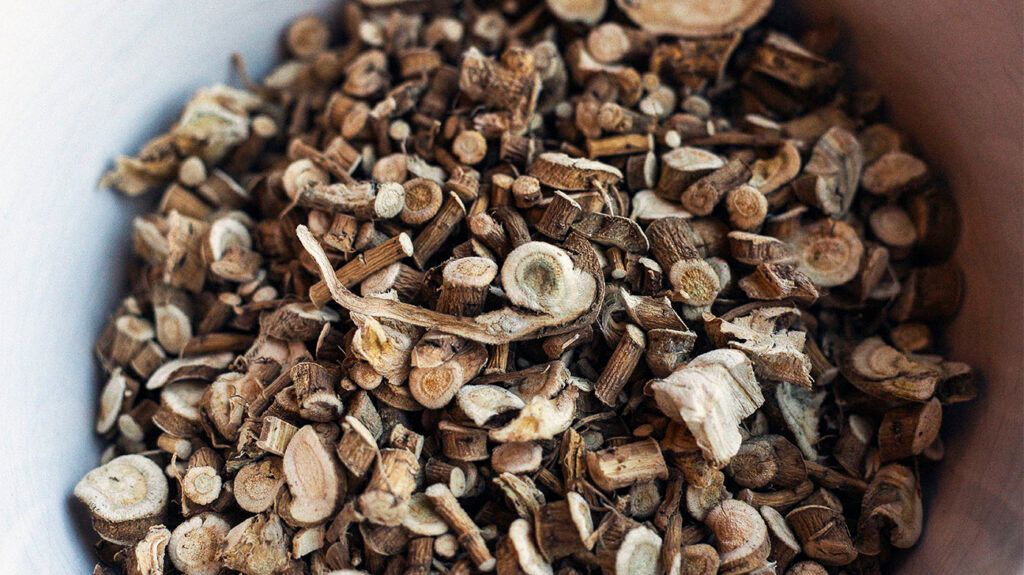
Marshmallow root comes from the marshmallow plant and looks like a brown, fibrous husk. The flowers, root, and leaves of the marshmallow plant are edible.
The medicinal properties of marshmallow root come from the mucilage, or sap-like substance, that the plant produces.
The mucilage of the plant contains antioxidants and forms a coating over the mucosa, which is the inner lining of certain parts of the inside of the body.
Marshmallow candy got its name from marshmallow root because manufacturers originally used the root’s mucilage to make this confection. Today, however, candy marshmallows typically do not contain the herb. Instead, they consist of sugar and gelatin.
The following sections discuss some reported benefits of marshmallow root.
Some natural and herbal cough syrups and cough drops contain marshmallow root. The mucilage may have a soothing effect on the esophagus by coating it.
The results of several small studies have suggested that herbal cough remedies that contain marshmallow root can have this effect. In a 2018 study, the participants reported that both marshmallow root lozenges and syrup helped relieve dry cough.
Another 2019 study found that children who took an herbal mixture that contained marshmallow and other herbs, including chamomile and common mallow, had a less severe cough and fewer nighttime awakenings than those who received a placebo instead. This study did not, however, look at the effects of marshmallow root alone, so other herbs in the mixture could have been responsible for the medicinal effects.
The results of an older small-scale study suggest that children who received an herbal mixture that contained marshmallow root and other medicinal plants had fewer and less prolonged respiratory infections.
Parents and caregivers should talk with a doctor before giving a child any herbal remedies.
Chronic dry mouth, or xerostomia, may increase the risk of cavities, gum disease, and dental infections. Dry mouth usually means that a person has too little saliva in their mouth.
Antihistamines, blood pressure medications, neurological problems, and autoimmune diseases are among its many causes.
The authors of a 2015 study concluded that people who have hyposalivation, or low levels of saliva, may benefit from using marshmallow root. The herbal remedy helped with dry mouth symptoms, although it was not more effective than the other two treatments in the study, which were both over-the-counter dry mouth treatments.
To treat dry mouth, people can consider using marshmallow root lozenges. It is important to allow the lozenge to dissolve slowly in the mouth and to avoid chewing it.
Alternatively, people can make an herbal tea using either marshmallow root tea bags or the dried herb in a tea strainer. People should follow the product instructions to determine how much to drink per day or consult a medical professional to find a safe amount.
A 2015 animal study found that marshmallow flower extract may help protect the gut from gastric ulcers.
Researchers tested the effects of the extract on rats, using a nonsteroidal anti-inflammatory drug (NSAID) to induce ulcers in the rodents. Rats that received marshmallow root were less likely to develop stomach ulcers than rats that did not get the extract.
Based on these results, the authors suggest that the mucilage and flavonoids in the marshmallow plant may cover and protect the mucous lining of the stomach, which may reduce the risk of certain ulcers, including NSAID-associated ulcers.
More studies are necessary to confirm these effects in humans.
Marshmallow root may help with skin irritation and inflammation. An older research review suggests that its topical application may help with
Although marshmallow root may have a healing effect on sun-damaged skin, people should not use it in place of proper sun protection. UV radiation from the sun is a leading cause of skin cancer, and it can also cause premature aging of the skin.
The soothing effect of marshmallow plant extracts may also help speed wound healing.
An older study on rats found that applying marshmallow extract topically
When gastric reflux occurs, acid from the stomach flows back up into the throat, which can cause damage to the esophagus. Due to the ability of marshmallow root’s mucilage to coat the mucosa, some people take marshmallow root to protect their esophagus from damage.
A 2017 research review notes that no rigorous studies have been done to evaluate these effects. Ask a healthcare professional about herbal remedies before trying them for gastric reflux.
Marshmallow root is unlikely to cause side effects when a person uses it properly. Most research has shown that people have a very low risk of adverse reactions.
However, in rare instances, people may be allergic to marshmallow root. To check for a skin allergy, they can apply a small amount of marshmallow root to the area of skin inside the elbow. If no reaction occurs within 24 hours, it should be safe to use elsewhere on the skin.
It is also important to note that the safety of marshmallow root for people who are pregnant or nursing, and their babies,
People can use marshmallow root in a variety of ways. When purchasing any marshmallow products, it is important to ensure that they contain the root of the plant.
How to make marshmallow root tea
Using dried marshmallow root for loose-leaf tea is very straightforward. People can pour boiling water over the dried root before covering and steeping it for 5 to 10 minutes. It will then be ready to strain and drink.
Another option is to use ready-made marshmallow root tea bags. A person will just need to cover a tea bag with boiling water and allow it to steep for up to 10 minutes.
People who prefer a sweet-flavored tea can add honey.
Using marshmallow powder
Marshmallow powder usually comprises a combination of the different parts of the plant, but the label may list how much of the root it contains.
People can mix marshmallow powder with water or juice to create a drink.
Alternatively, they can mix marshmallow root powder with water, pour it into a jar or container with a lid, and allow it to steep at room temperature overnight. As it sits, the mucilage creates a thick, slippery liquid that works well to soothe the throat and mouth. It is possible to store the liquid in an airtight container in the refrigerator for up to 2 weeks.
How to make marshmallow skin salve
People can make a skin salve by combining cooled marshmallow tea or liquid marshmallow extract with coconut oil. They can apply this salve directly to the skin.
Dosage
The exact dosage of marshmallow root that may benefit a person has not been determined in studies. It is best to follow the directions on the product packaging.
Is taking marshmallow root daily safe?
Marshmallow root may be safe to take daily, but again, it is best to follow the package instructions. If a person is pregnant, nursing, taking medications, or has any other health concerns, a healthcare professional can help determine whether daily use is safe.
Marshmallow root may be a good natural option for treating minor ailments, such as a dry cough. As with any herbal remedy, ask a doctor before using it, and do not use herbs in place of a doctor’s recommended treatment.