
Age spots are harmless marks that can appear on the skin as a person ages. These spots can look similar to some types of skin cancer or precancerous growths.
Both age spots and skin cancer are more likely to appear on areas of the skin that are usually exposed to the sun, like the hands, face, or shoulders.
Understanding key differences between age spots and skin cancer can help a person identify when they may need to seek medical advice. Key differences can include texture, color, and placement.
This article discusses the differences between age spots and skin cancer as well as the symptoms, diagnosis, and treatments for both conditions.
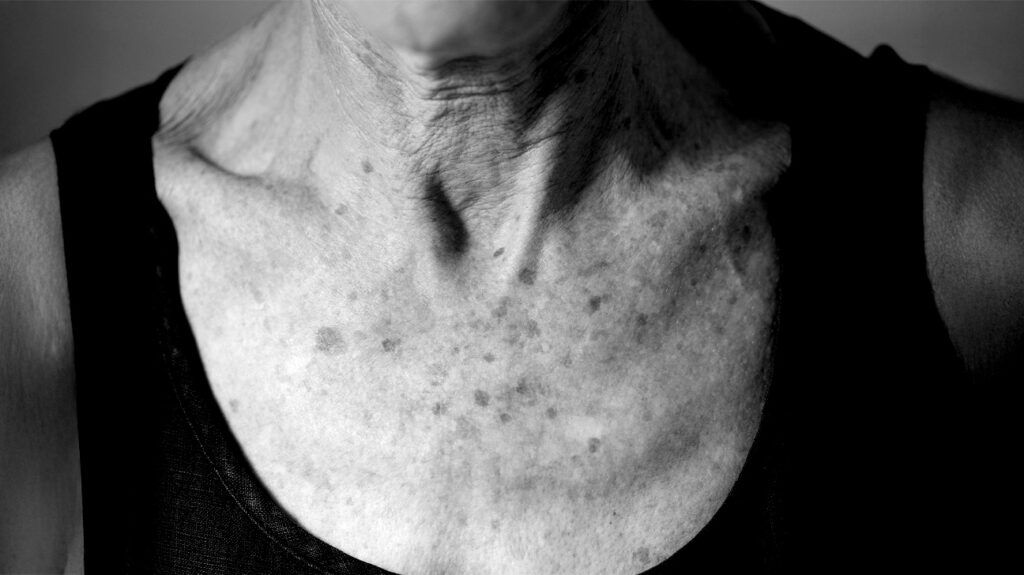
Age spots and skin cancer can both appear on the skin and may appear similar. However, unlike skin cancer, age spots are harmless and do not need treatment or removal.
Age spots
Age spots, sometimes called solar lentigines or liver spots, are small patches that appear darker than the surrounding skin. They are generally flat and smooth and do not itch or feel crusty.
Age spots develop as a result of the body producing excess melanin to protect the skin from the sun’s UV radiation. This causes the skin to darken.
Age spots are generally more common on light skin, but they can develop on any skin color. They usually appear from middle age onward.
Skin cancer
Skin cancer is the
Skin cancer happens when UV radiation or other environmental or genetic factors damage skin cells. This damage causes the cells to mutate, grow, and spread at an accelerated rate.
Unlike age spots, skin cancer is harmful and may spread to other parts of the body.
The three most common types of skin cancer are:
- basal cell carcinoma
- squamous cell carcinoma
- melanoma
Another type of mark that may be mistaken for an age spot is actinic keratosis. This is a type of precancerous growth that occurs due to UV radiation damage.
Age spots cannot turn into cancer.
However, actinic keratosis, which can appear similar to age spots, is a precancerous growth. This means that, if left untreated, this condition may turn into cancer.
It is important to keep a close eye on any new or changing marks on the skin and speak with a healthcare professional if any symptoms of skin cancer or actinic keratosis appear.
There are many differences in the symptoms between age spots and skin cancer that can help a person identify which condition is occurring.
Age spot symptoms
Age spots are:
- flat and smooth
- yellow, brown, or gray
- defined with clear borders
- between a few millimeters or centimeters in size
- on sun-exposed areas, such as the:
- face
- hands
- shoulders
- feet
- arms
- back
Age spots may fade in winter but get more pronounced in summer when the skin becomes exposed to more sunlight.
Skin cancer symptoms
Skin cancer symptoms can vary depending on many factors, including the type of skin cancer.
Signs that a skin growth may be cancerous
- asymmetrical shape
- irregular, blurred, or ragged edges
- changing size, color, or shape
- multiple colors on the same spot
- pink, blue, purple, black, or brown coloring
- raised, red patches
- pale or yellow firm patches, similar to scars
- pain, itching, oozing, or bleeding
- crusty or scaly patches
- raised edges that lower in the middle
Signs of actinic keratosis include:
- raised, rough, or scaly patches
- red, gray, pink, or skin-colored patches
- flat scaly patches that look similar to age spots
- scaly, rough bumps that can appear in clusters similar to acne
- pale or scaly patches on the lips
- horn-like growths
Generally, a person should speak with a doctor if they notice any skin symptoms that are not usual for them.
It is important to monitor any new marks on the skin and to contact a doctor if there are any potential signs of skin cancer. Identifying cancer early can make it easier to treat.
Seek medical advice if a mark on the skin:
To diagnose age spots, a doctor or dermatologist performs a physical examination of the spot.
They will assess the appearance, texture, and placement of the spot to determine whether it may be something other than an age spot.
If they are not sure after the examination, the doctor may perform a skin biopsy to test for other conditions, such as skin cancer or actinic keratosis.
The results of a skin biopsy indicate whether a person has skin cancer or another skin condition.
Age spots do not require treatment because they are not harmful. However, some people may choose to have treatment to reduce their appearance.
Possible treatments for age spots include creams and lotions that may reduce the appearance of age spots over time. Many of these are available without a prescription. A dermatologist can recommend treatments that are most likely to work.
Procedures for reducing the appearance of age spots include:
- laser treatments
- cryosurgery
- microdermabrasion
- chemical peeling
Skin cancer treatment
Treatments for skin cancer vary depending on many factors, including the type and stage of skin cancer and a person’s individual circumstances.
If possible, a doctor will surgically remove basal cell and squamous cell cancers. However, in some cases, the position of the cancer can prevent surgical treatment.
Treatments for skin cancer and actinic keratosis can include:
- topical therapies
- radiation therapy
- chemotherapy
- immunotherapy
- systemic medication
Age spots, skin cancer, and actinic keratosis can appear similar to one another, but there are ways to tell each condition apart. Details such as the size, shape, texture, and color of marks on the skin can help a person know when to seek medical attention.
It is important to speak with a doctor about any unusual changes to the skin. Diagnosing skin cancer early can make treatment easier and improve health outcomes. A person may also choose to treat age spots to reduce their appearance.