
The three main types of crutches are axillary, forearm, and platform. The type a person requires will depend on their needs and physical capabilities, as each assists movement in different ways.
Crutches are medical devices that transfer a person’s weight from their legs to their arms and torso.
A person may require crutches to help them move around if an injury or illness affects their ability to bear weight or maintain balance in their lower extremities.
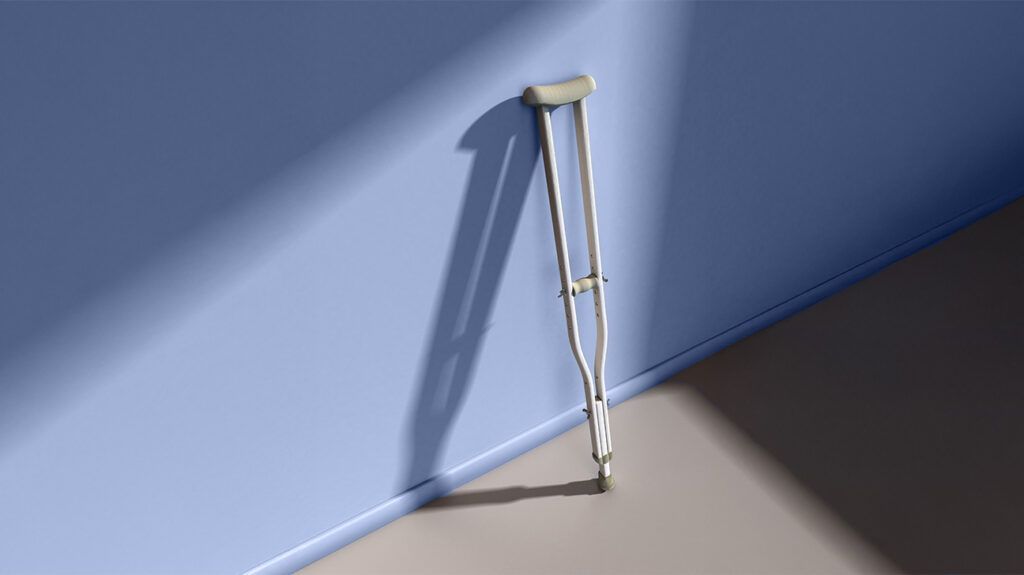
The type of crutch a person requires will depend on their illness or injury, their physical abilities, and other factors.
There are
Axillary crutches
Axillary crutches, also known as axilla or underarm crutches, are the most common type. They are typically adjustable for height.
Axillary crutches feature a pad at the top that fits underneath the armpit, an adjustable handgrip, and a frame that usually includes two joined rods.
A healthcare professional may prescribe axillary crutches to a person with a lower limb injury. They are usually best for short-term use, and are most suitable for people with enough upper-body strength to use them comfortably.
Axillary crutches may not be ideal for people with wrist problems, coordination difficulties, or a weaker upper body.
Forearm crutches
People sometimes refer to these as elbow crutches. This type of crutch has a handgrip and features a cuff to support the back of the arm above the elbow.
Forearm crutches are better suited for long-term use than axillary crutches. A healthcare professional may prescribe these crutches to someone with a long-term disability that affects movement, such as cerebral palsy.
Forearm crutches provide more maneuverability than axillary crutches. The supportive cuff around the arm also allows a person to use their hands without dropping the crutch.
As with axillary crutches, forearm crutches require upper body strength to use, as they transfer body weight to the upper arms.
Platform crutches
Platform crutches, also known as gutter crutches and forearm support crutches, are less common.
The crutches include a handgrip, a flat, padded platform where a person can lean their forearm, and sometimes an elbow guard.
A healthcare professional may prescribe platform crutches to people with the following:
- neurological impairment that causes long-term disabilities of the lower limbs
- wrist injury or conditions that affect the strength or mobility of the wrist, such as arthritis
- chronic pain conditions
These crutches provide greater stability, but less maneuverability than axillary and forearm crutches.
Specialized crutches can provide additional or different types of stability and mobility support, if necessary.
These include hands-free crutches, which allow a person to rest their bent knee on a padded platform on the device and secure it to the leg with fabric straps and buckles. The crutch extends out beneath the knee like a prosthetic limb to allow for hands-free walking.
Standard crutches may also feature specialized design features and modifications. These can include:
- Additional stability: Reinforced frames and wider bases can increase stability and improve balance.
- Ergonomic features: Ergonomic supports and hand grips may provide better comfort and minimize strain.
- Shock absorption: Shock absorption systems that cushion the impact of the crutches may also help reduce the impact on a person’s joints and muscles.
A healthcare professional will usually provide instructions on how to use crutches when prescribing them.
Tips for walking with crutches
- ensure balance and stability before moving
- move both the crutches and the injured or affected leg forward at the same time
- push down evenly on both handgrips and step forward with the other leg
- regain balance before continuing
A healthcare professional or urgent care facility may supply a person with crutches. Alternatively, crutches are available from physical and online drug stores, medical supply companies, and medical device rental suppliers.
Rehabilitation centers, medical suppliers, and organizations that supply pre-owned goods may also be able to provide crutches that others have donated.
Renting crutches or using crutches that someone has donated may help reduce costs.
Health insurers will typically cover most of the cost of crutches if a healthcare professional deems them medically necessary.
Medicare
Medicare covers the cost of axillary and forearm crutches under Medicare Part B, as part of the durable medical equipment (DME) coverage.
A person will usually qualify for coverage if a healthcare professional deems the crutches medically necessary and the supplier of the crutches is Medicare-approved.
After a person meets their annual Part B deductible, their Medicare plan will cover 80% of the cost of their crutches. The individual is responsible for the coinsurance cost, which is the remaining 20% of the cost of the crutches.
There are three main types of crutches. These are axillary crutches, forearm crutches, and platform crutches. Each type has specific advantages.
A healthcare professional will decide which type is most suitable for an individual based on their health requirements, their physical capabilities, and other factors.
Health insurance typically covers most of the cost of crutches. A person may obtain them from a health professional, a medical device retailer, or as a donation from a person or organization.