
Uveitis is inflammation of the middle layer of the eye, or the uvea, and the surrounding tissue. It can cause pain, eye redness, and cloudy vision.
The term “uveitis” refers to a range of conditions rather than a single symptom. An injury to the eye, infection, inflammation, and some underlying diseases may cause it.
Uveitis can lead to swelling and damage in the tissue of the eye. Untreated, it may lead to vision loss and other issues. It can affect one or both eyes.
Keep reading to learn the symptoms, causes, diagnosis, and treatment of uveitis.
Uveitis is inflammation of uvea. The uvea, also known as the uveal layer, uveal coat, uveal tract, or vascular tunic, is the middle layer of tissue found in the wall of the eye. This layer within the eye helps with several functions, including absorption of light and focusing.
The uvea consists of several parts. These include the:
- iris, which is the colored part of the eye that surrounds the pupil
- choroid, which helps the lens focus
- ciliary body, which contains a ring of muscle that sits behind the iris
The different types of uveitis affect different parts of the uvea, as described below.
Types of uveitis
There are
- Anterior uveitis: This is the most common form of uveitis. Also known as iritis, it affects the front part of the eye. Doctors think it results from inflammation of the iris. Iridocyclitis is similar, but it includes inflammation of the ciliary body.
- Intermediate uveitis: Intermediate uveitis can be vitritis or pars planitis. Vitritis is an inflammation of the jelly-like part of the eye, the vitreous cavity. When there is no underlying cause for the intermediate uveitis, it is known as pars planitis. Pars planitis is a subtype of intermediate uveitis that has no underlying systemic disease or infection.
- Posterior uveitis: Posterior uveitis is an inflammation of the retina and choroid. Posterior refers to the back of the eye.
- Panuveitis: Panuveitis is inflammation in all layers of the uvea. This type of uveitis can affect other areas of the eye, including the lens, retina, optic nerve, and vitreous. It can cause reduced vision and blindness.
Uveitis types can be either acute or chronic. “Acute” means short-term, while “chronic” means long-term.
The signs and symptoms of uveitis can vary. Often, they
- floaters, which are spots in the eye that look like tiny rods or chains of transparent bubbles floating around in the field of vision
- eye pain and redness
- general vision problems, including blurred or cloudy vision
- photophobia, an abnormal sensitivity to light
- headaches
Without treatment, uveitis can lead to vision loss.
Uveitis can occur in anyone. The inflammation may occur only in the eye, or have links to conditions that affect other parts of the body, too.
Infections that
- HIV and AIDS
- herpes simplex
- brucellosis
- shingles
- leptospirosis
- Lyme disease
- syphilis
- toxocariasis
- toxoplasmosis
- tuberculosis
Autoimmune and inflammatory disorders may also cause uveitis. These include:
- psoriasis
- rheumatoid arthritis
- Crohn’s disease
- ulcerative colitis
- arthritis
- ankylosing spondylitis
- Vogt-Koyanagi-Harada disease
- multiple sclerosis
Injury to the eye is another possible cause of uveitis. Injury may be due to trauma, recent surgery, or exposure to chemicals.
Risk factors
Several factors can increase a person’s risk of developing uveitis. Some common risk factors are:
- smoking
- use of certain medications
- low vitamin D levels
- living with an autoimmune disease
- pregnancy
In addition, females have a higher chance of developing uveitis than males.
An eye doctor
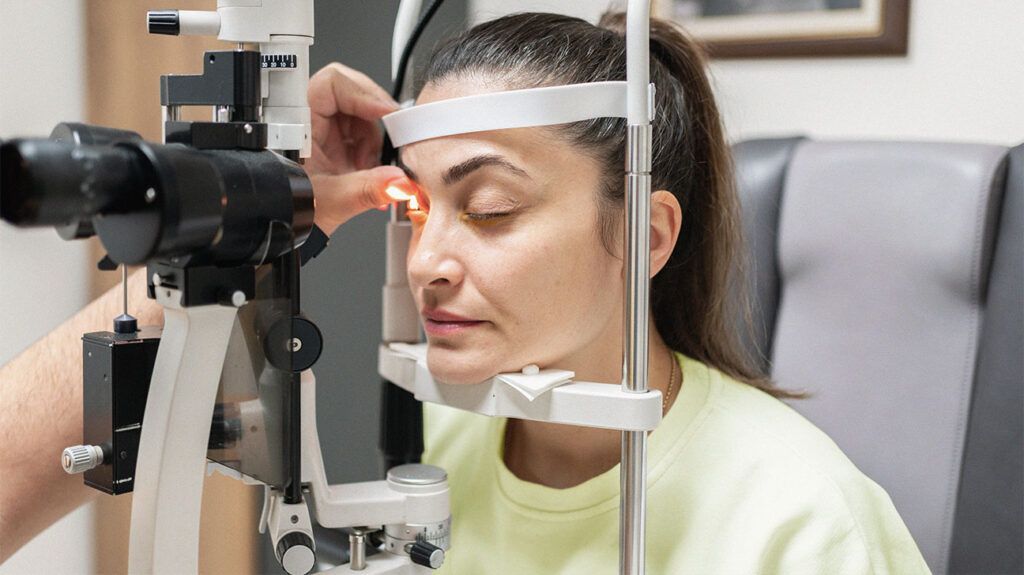
During an exam, the doctor will likely look at the eye with a special slit lamp. The key feature of uveitis is seeing white blood cells either in the anterior chamber or vitreous.
Other findings include bumps on the cornea, called keratic precipitates. If there is inflammation in the iris, patients may feel some pain when the pupil contracts, which is when light hits it.
Due to the number of potential underlying conditions that may cause uveitis, the doctor may refer a person to a uveitis specialist or rheumatologist for a complete check-up and diagnosis of an underlying condition.
A person with uveitis who receives prompt and appropriate treatment will usually recover. Without treatment, the risk of cataracts, glaucoma, band keratopathy, retinal edema, and permanent vision loss increases.
According to the American Academy of Ophthalmology, the most common treatment for uveitis involves the use of corticosteroid drops to help reduce inflammation. In addition, a person may use eye drops to help open the pupils, which reduces swelling and pain.
An ophthalmologist
- oral steroids in the form of pills
- injected steroids given either around or in the eye
- a surgical implant that provides small doses of steroids over time
A doctor may also recommend immunomodulator therapy or biologics to help reduce the immune system response. If an ophthalmologist or optometrist suspects an underlying autoimmune disorder, they will likely recommend that a person contact a rheumatologist for specialized care.
Which treatment a doctor recommends can vary based on the type of uveitis.
Treating anterior uveitis
Some common treatments for anterior uveitis include:
- eye drops to widen the pupil
- drops to reduce pressure on eyes
- topical corticosteroids
Treating intermediate and posterior uveitis
A doctor may use additional methods to treat intermediate, posterior, and anterior uveitis, including:
- corticosteroids in the form of injections, implants, or oral medication
- antivirals, antibiotics, or other medications
- nonsteroidal anti-inflammatory drugs to treat pain and swelling
- immunosuppressants
- corticotropin
- biologic agents
The treatment they suggest will depend on the underlying cause.
Prompt treatment and close monitoring can help reduce the risk of complications.
If they do occur, they may include:
- glaucoma
- cataracts
- macular edema
- scar tissue
- retinal detachment
- vision loss
With early diagnosis and treatment, the outlook for uveitis is
The time it takes to recover from uveitis depends on the underlying cause, and whether it is acute or chronic.
People living with chronic forms of uveitis may need ongoing monitoring and care to ensure that other conditions, such as cataracts or glaucoma, do not develop.
A person can reduce their risk of vision loss from uveitis by following all treatment recommendations to reduce inflammation and pressure in the eye.
The following helps answer some common questions about uveitis.
Is there a natural cure for uveitis?
No, there is no proven natural cure for uveitis. It is essential that people with this condition get treatment from an eye doctor, as alternative therapies may not work, which may mean a person eventually loses vision.
Complementary therapies may help to reduce symptoms of chronic conditions that can lead to uveitis, but they are not a cure and may not directly benefit the eyes. They are not a substitute for medical care.
A person should talk with their doctor about complementary therapies before starting one, as they can have risks.
What is the difference between uveitis and conjunctivitis?
Conjunctivitis, or pink eye,
While both can cause red, irritated eyes, conjunctivitis often does not cause vision issues. However, a person may experience watery eyes, a feeling that something is stuck in the eye, discharge, or irritation.
The causes of these conditions also differ. While uveitis may be the result of inflammation from a range of causes, conjunctivitis is typically the result of an infection, irritant, or allergen.
Uveitis is inflammation of the middle layer of the eye. There are several types of uveitis based on the parts of the eye it affects. A person may develop acute or chronic forms, which affects the outlook.
Treatment can vary, but the main focus is to reduce inflammation and swelling to prevent complications. People living with an underlying condition, such as an autoimmune disease, should work with their doctor to manage both conditions and reduce the risk of vision loss.