
In sleep apnea, a person’s breathing repeatedly stops and starts during sleep. Overweight and obesity are major risk factors for it, and sleep apnea can also contribute to overweight and obesity.
Sleep apnea is a
Symptoms include snoring, waking up gasping for air, and daytime sleepiness. If someone experiences these symptoms, it is crucial to consult a healthcare professional.
This article describes the relationship between sleep apnea and weight gain.
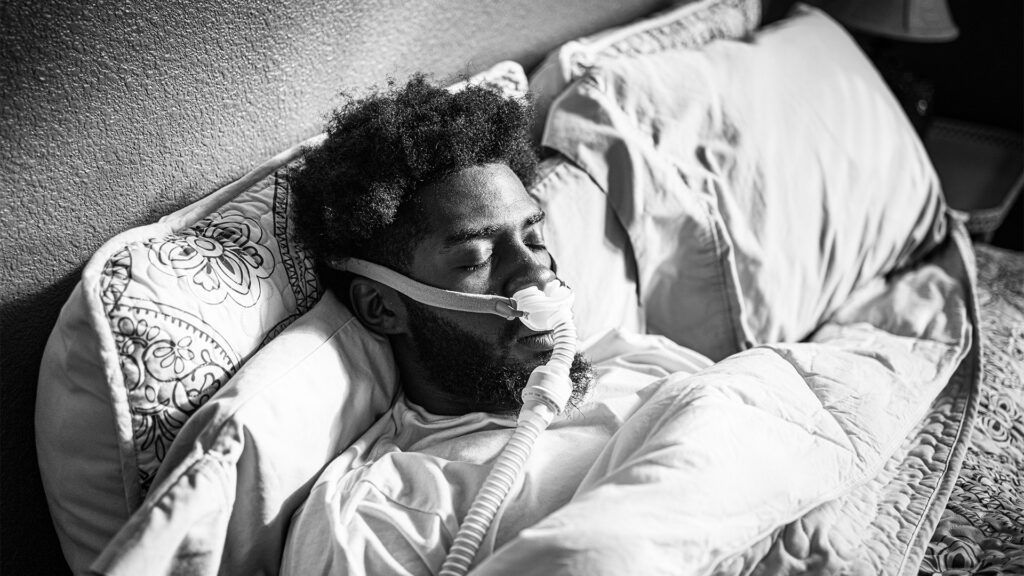
Sleep apnea prevents the body from receiving enough oxygen during sleep. This causes the person to gasp for air, resulting in loud snoring or choking sounds, which may wake the person multiple times throughout the night.
These frequent awakenings can lead to inadequate sleep, which can affect daily functioning.
As a
Review authors explain that the sleep-wake cycle significantly affects hormones that regulate appetite and calorie intake. Short sleep duration can increase levels of the hunger hormone, ghrelin, and decrease levels of the satiety hormone, leptin.
This, in turn, can stimulate appetite, leading to increased food intake and eating behaviors including:
- eating more meals and snacks throughout the day
- eating at night
- consuming more high fat, high energy foods
- consuming fewer fruits and vegetables
Insufficient sleep can also lead to metabolic changes that may undermine a person’s efforts to lose weight. These include:
- lowering basal metabolic rate (BMR), which is the amount of energy the body uses to fulfill essential functions during rest, such as breathing, circulation, and digestion
- reducing the body’s use of stored fat for energy
- increasing the risk of leptin resistance, in which the brain no longer responds normally to leptin, and thus no longer feels full after eating
According to the American Academy of Sleep Medicine, excess weight is a major risk factor for sleep apnea. Indeed, a person is much more likely to develop sleep apnea if they have overweight, defined as a body mass index (BMI) of 25 or above, or obesity, defined as a BMI of 30 or above.
As the
An accumulation of fat in the chest and abdomen can also put pressure on the lungs, reducing their capacity. The reduction in air passing through the lungs then increases the likelihood of upper airway collapse.
Both sleep apnea and excess weight can increase the risk of health complications.
Complications of sleep apnea
According to the U.K. National Health Service (NHS), sleep apnea increases the risk of various health complications, including:
- high blood pressure
- heart attack
- stroke
- type 2 diabetes
- depression
- mood disturbances
The NHS adds that sleep apnea can also cause tiredness and problems with concentration, which can increase the risk of serious accidents.
Complications of excess weight
According to the
- high blood pressure
- high cholesterol
- coronary heart disease
- stroke
- type 2 diabetes
- gallbladder disease
- osteoarthritis
- various cancers
- mental health issues, such as depression and anxiety
- premature death
A 2018 study investigated the relationship between weight loss and OSA. The study included 114 participants with overweight or obesity, among whom 51.8% had OSA.
All participants completed a 12-month behavioral weight loss intervention. Weight loss was associated with a significant reduction in OSA occurrence and severity.
However, the participants with OSA experienced less weight loss than those who did not have OSA. They were also less likely to stick to weight loss behaviors, such as increasing physical activity and calorie goals.
The study authors suggest this may be because of the effects of OSA on the participants, such as:
- sleep disturbances
- altered glucose metabolism
- impaired appetite regulation
A
Participants assigned to the treatment group received the intervention in addition to their usual care, while those in the control group received usual care only.
Usual care consisted of controlled positive airway pressure (CPAP) therapy, in which a machine delivers a steady flow of air through the mouth or nose to keep the airways open during sleep.
Compared with participants in the control group, those in the treatment group demonstrated improvements in:
- OSA severity
- cardiometabolic risk
- health-related quality of life
At 8 weeks, 45% of participants in the treatment group no longer needed CPAP therapy. At 6 months, this figure rose to 62%.
The study authors conclude that weight loss interventions may be an important strategy to reduce OSA and its associated health risks.
Receiving treatment for sleep apnea may help with weight loss.
A 2019 study investigated BMI changes in participants undergoing CPAP therapy for OSA. The study included 119 participants, of whom 83% had severe OSA.
After using the CPAP machine for 9 months:
- 47% of participants showed clinically significant weight loss
- 47% of participants maintained their initial weight
- 6% of participants increased in weight
These results demonstrate that almost half of the participants with OSA lost weight following 9 months of CPAP therapy for OSA.
A person should talk with a doctor if they become aware of sleep apnea symptoms during sleep,
- breathing that stops and starts
- frequent loud snoring
- gasping for air
A person should also talk with a doctor if they have the following symptoms during the daytime, which may be a sign of sleep apnea:
- daytime tiredness or sleepiness
- problems with attention and learning
- delayed reaction times
- dry mouth
- headaches
- sexual dysfunction or decreased libido
- waking up often during the night to urinate
Anyone concerned about their weight can ask a doctor for information and advice on weight loss.
Without treatment, sleep apnea can cause serious and potentially life threatening health complications.
Individuals with sleep apnea require regular checkups to ensure their treatment is working effectively. They may also need to take part in occasional sleep studies so that doctors can monitor their sleep quality and check for any sleep apnea symptoms while the person is using their sleep apnea treatment.
According to the
Sleep apnea is a sleep disorder in which a person’s breathing repeatedly stops and starts during sleep, causing them to wake multiple times per night.
Overweight and obesity are major risk factors for sleep apnea. Excess weight around the neck can restrict or block the upper airway, while an accumulation of fat in the chest or abdomen can put pressure on the diaphragm, restricting lung capacity.
The sleep disturbances a person experiences with sleep apnea can also reduce sleep quality and sleep duration. This can increase levels of the hunger hormone, ghrelin, and reduce levels of the satiety hormone, leptin, resulting in eating habits that may contribute to weight gain.
Sleep loss can also trigger other metabolic issues that lead to weight gain or difficulties losing weight.
A person can contact a doctor if they experience signs or symptoms of sleep apnea, or if they have concerns about their weight. A doctor can recommend appropriate and effective treatment options.