
Duchenne muscular dystrophy (DMD) is a genetic condition that causes progressive muscle weakness and wasting. It is an X-linked recessive disorder that occurs due to changes in the DMD gene, which codes for the protein dystrophin.
Dystrophin is a protein that plays a role in strengthening muscle fibers and protecting them from injury as the muscles contract and relax.
In DMD, genetic variations in the dystrophin gene affect the function of the dystrophin protein. These alterations mean that muscle damage occurs after they repeatedly contract and relax with use. This damage weakens the muscle cells and causes them to die over time, resulting in the characteristic muscle weakness associated with DMD.
A note about sex and gender
Sex and gender exist on spectrums. This article will use the terms “male,” “female,” or both to refer to sex assigned at birth. Learn more.
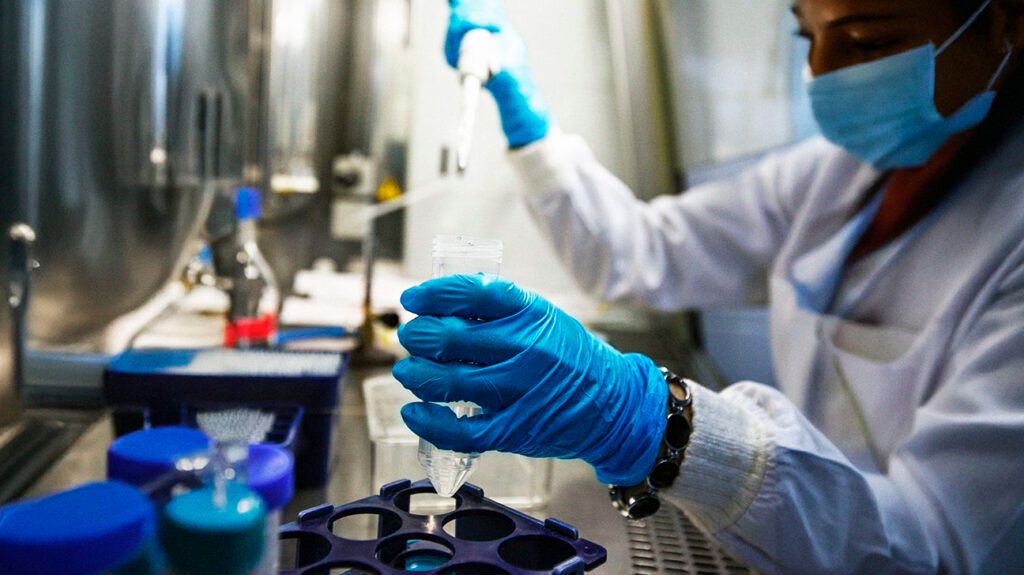
DMD occurs due to changes in the DMD gene, which produces the dystrophin protein. The absence of this protein, which plays an essential role in supporting muscle cells, leads to the degeneration of muscle fibers and the characteristic symptoms of DMD.
Research highlights that the DMD gene is the largest known human gene, featuring 79 exons (coding regions). The gene’s large size means it is prone to alterations that may result in DMD. According to current research, there are thousands of different variations in the DMD gene.
The most common causes of DMD are large deletions in the gene, where one or more exons are not present.
People
Males typically have one X chromosome, while females usually have two. With X-linked recessive inheritance, having only one copy of a gene alteration is sufficient to cause the condition in males.
Because females usually have two copies of the dystrophin gene, if one does not work, the second copy is still able to produce dystrophin. This means that a variation in both genes is necessary for them to develop DMD. For this reason, DMD occurs more frequently in males than females.
A female with a change in one of the two copies of the DMD gene is known as a carrier. Typically, a carrier of DMD will not show symptoms. However, some individuals may show mild symptoms, such as muscle weakness.
Likelihood of passing on the DMD gene variation
The chance of passing on the gene variation to offspring is different for males and females. Female carriers have a
A male with DMD also has a 50% chance of passing on the gene alteration. However, it is not possible for them to pass the condition onto male offspring, as a genetically male child inherits a Y chromosome from their male parent, not an X chromosome.
A male with DMD will always pass on the gene variation to genetically female offspring, as they inherit the only X chromosome. This means the female child will be a carrier.
However, it is also possible for DMD to occur in a family with no history of the condition. Some evidence suggests that de novo changes, which are DNA changes not present in previous generations, account for 1 out of 3 cases of DMD.
A doctor may request genetic testing for DMD if a person displays signs of the condition. Testing will typically involve analyzing a blood sample to identify a variation in the dystrophin gene. Genetic testing can also locate exactly where the gene alteration occurs.
Because treatment methods currently in development require knowledge of the precise gene variation, genetic testing can also help direct future treatment options.
Providing a working version of the DMD gene allows the body to produce functioning dystrophin. Although this treatment cannot restore lost muscle cells, it can help stabilize the progression of symptoms and may help improve strength and endurance.
In 2023, the
Elevidys involves modifying a virus to deliver healthy genes into cells, which enables a person to produce a shortened version of dystrophin that helps strengthen the muscles. A person receives Elevidys as a single intravenous dose.
However, more research is still necessary to determine whether the effects of gene therapy are long-lasting and to understand any potential safety risks or side effects. For example,
Duchenne muscular dystrophy (DMD) is a genetic condition that causes muscle weakness and wasting. It occurs due to variations in the DMD gene. This gene produces a protein called dystrophin, which is essential for muscle integrity.
DMD is an X-linked recessive condition. This means the related gene is present on the X chromosome and the condition is more likely to affect males.
Males cannot pass the condition onto male offspring. However, their female offspring will always be carriers. Female carriers have a 50% chance of passing the gene on. This includes a 25% chance of a male child having the condition and a 25% chance of a female child being a carrier. It is also possible for DMD genetic alterations to occur spontaneously.