
Reformer Pilates is a type of Pilates that uses a piece of equipment called a reformer, which typically has a moving platform on tracks. Some types of reformers may have ropes and pulleys to add resistance.
Research suggests that reformer Pilates may offer benefits such as body composition, muscle strength, and mental health improvements.
Most people do reformer Pilates in a dedicated class, where they can access the reformer apparatus and benefit from an instructor’s guidance.
The use of binary terms such as “male” and “female” or “men” and “women” in this article reflects the language of the sources we’ve used. Unless otherwise noted, it’s unclear whether the research we reference included participants with expansive gender identities.
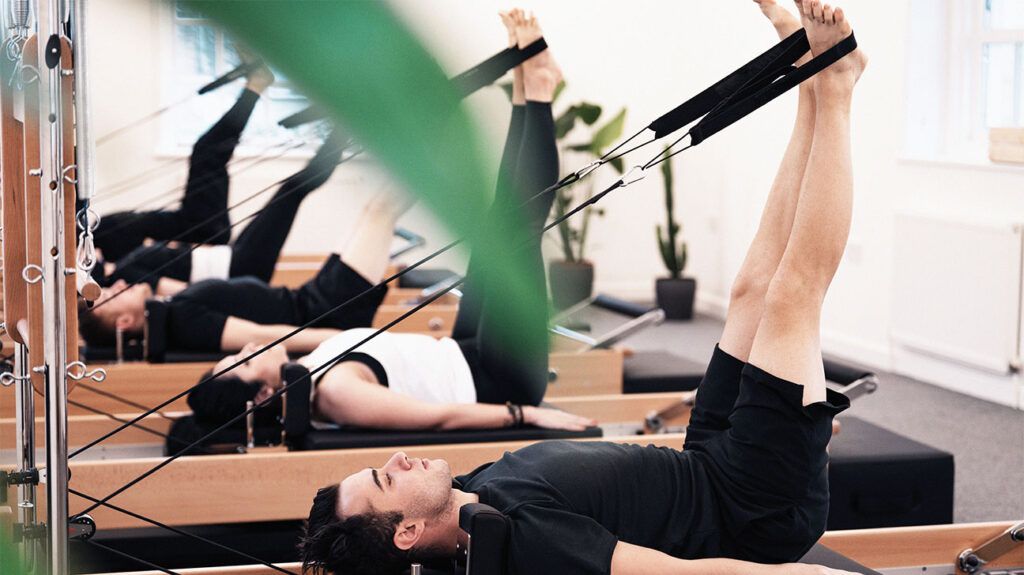
Joseph Pilates created Pilates in the 1920s. Pilates is a type of full-body exercise that involves focused, rhythmic muscle movements and breathing with an emphasis on control and precision. All types of Pilates involve resistance, aerobic, and strength training.
People can try Pilates with or without equipment. Reformer Pilates involves an apparatus called a reformer, which Joseph Pilates created.
A reformer consists of a platform that connects to springs and moves along tracks. A person’s body weight helps provide resistance. Some reformers may also have additional features, such as resistance bands, ropes, and pulleys.
People typically practice reformer Pilates in classes where they can access a reformer. However, some may choose to buy a reformer and practice it at home.
Reformer Pilates may offer the following benefits.
Strength and mobility
A 2025 study tested the effects of reformer Pilates on 47 adult women with overweight or obesity.
The participants did reformer Pilates exercises three times a week for 8 weeks. After 8 weeks, the participants had significant increases in muscle strength and endurance.
Although, a 2022 review suggests Pilates is not necessarily better than other types of exercise if a person wants to improve strength, resistance, flexibility, and balance.
Weight management
According to a 2025 study, reformer Pilates twice or three times weekly can lead to fat loss and improved body mass index (BMI) scores in adult women with obesity.
A 2022 review suggests reformer Pilates may have benefits for reducing BMI and fat mass.
Similarly, a 2021 review concludes that Pilates can significantly reduce the following parameters in adults with overweight or obesity:
- BMI
- body weight
- body fat percentage
However, the review looks at Pilates in general, not just reformer Pilates. The researchers also conclude that more research is necessary to confirm their findings.
Improved posture
A 2024 review suggests Pilates may have positive effects on posture and postural issues, including:
- spinal abnormalities
- pelvic tilt
- forward head posture
- thoracic kyphosis
- rounded shoulders
Help with health conditions
Because reformer Pilates is low impact and has adjustable resistance, people with health concerns can adjust the exercise to suit their own abilities, which may make it preferable to other types of exercise.
Research suggests reformer and mat Pilates may offer benefits for various health conditions.
For example, a
A
However, more research into reformer Pilates’ effects on specific health conditions may be necessary.
Improved mental health
A 2021 review suggests Pilates had moderate to large effects on the following psychological health parameters in adults over 55 years:
- depression
- quality of life
- fear of falling
- pain
- sleep quality
- health perception
A small 2025 observational study also suggests that Pilates may have positive effects on depression, anxiety, stress, and other psychological symptoms.
Anyone interested in trying reformer Pilates can typically try it. If someone has a health condition that affects their mobility or bone strength, they may benefit from speaking with their healthcare team first.
However, reformers usually have adjustable resistance, so people can choose the strength that best suits them and adjust it over time as they grow stronger.
People who are pregnant should also speak with their doctor before trying reformer Pilates or any new exercise routine.
Reformer Pilates tends to occur in a class with a qualified instructor who can adjust a person’s posture and form to ensure they are safe.
If someone has a health condition and their doctor approves trying reformer Pilates, they can let their class instructor know beforehand of any potential adjustments they may need to make.
To start reformer Pilates, people can search for a class in their area. A studio’s website or reception will usually have information on how long a class will be and what to expect.
Below are some tips that may help when taking a reformer Pilates class for the first time:
- Choose a beginner class: If necessary, contact the studio or gym to check whether a class is suitable for beginners.
- Wear comfortable sports clothing: Choose clothing that does not restrict movement. Avoid loose clothing that could catch in the reformer.
- Stick to the tempo of the class: Do not try to move faster than the instructor, even if you are a fast learner. Pilates is about precision and controlled movements.
- Pay attention to your body: Pilates is a whole body workout. If something starts to hurt, speak with your instructor to see if you need to adjust your form.
- Bring water: Although reformer Pilates is low impact, it can still make you break a sweat. Bring a towel and plenty of water to replenish lost fluids.
Like any type of exercise, there is a risk that a person will injure themselves during reformer Pilates. This may be less likely if a person joins a class with a qualified instructor who can monitor and adjust their form if necessary.
To reduce the risk of injury, people can start at the lowest level of resistance the reformer offers and build up over time.
People with health conditions should speak with a healthcare professional before trying reformer Pilates to ensure it is a safe and suitable exercise option for them.
Another potential disadvantage of reformer Pilates is the need to access equipment, either through a class, a gym, or purchasing a reformer for home use. This can make it less convenient and more expensive than mat Pilates, which people can do at home.
Below is a quick comparison of reformer and mat Pilates:
| Reformer Pilates | Mat Pilates | |
|---|---|---|
| Equipment | a reformer | a mat, and potentially additional equipment such as exercise balls or bands |
| Location | typically in a class with a qualified instructor | at home or in a class with a Pilates instructor |
| Impact | low impact | low impact |
| Cost | tends to be more expensive due to the need to find a class | generally more affordable, although a class may still incur costs |
No recent research has completed a thorough comparison of mat and reformer Pilates. Neither type is necessarily better, but someone might find one type more suitable for them.
If people are unsure which type is best, they may benefit from speaking with a Pilates instructor or trying both types to see which they prefer.
Reformer Pilates is a type of Pilates that involves a piece of equipment called a reformer. A reformer consists of a platform that runs along tracks, and may also feature pulleys, ropes, and other workout equipment.
Like other types of Pilates, reformer Pilates focuses on precise movements and breathing control. Benefits may include increased muscle strength, flexibility, and mental health.
If someone wants to try out reformer Pilates, they can speak with a qualified instructor or healthcare professional to ensure it is a safe, suitable option for them.