
The Fast Facts
- Probiotics for kids may help manage diarrhea, support immune health, and promote useful gut bacteria. However, research on their benefits for children is limited, and they may not always help.
- When choosing a probiotic for a child, caregivers should look for products with at least 1 billion CFU (colony-forming units), clear ingredient labeling, and a form the child can take easily.
- Our dietitian-reviewed picks include Seed’s clinically-backed formula for constipation.
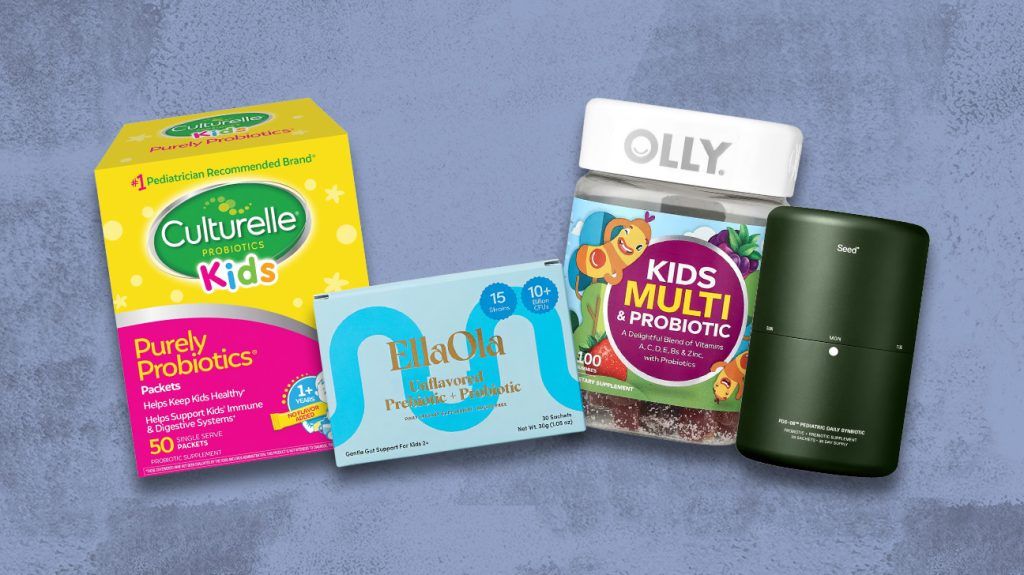
| Product | Form | CFU or AFU | Ages suitable for | Price |
|---|---|---|---|---|
| Seed | powder | 24.5 Billion AFU | 3 years and up | $39.99 a month |
| Culturelle | powder | 5 billion CFU | 1 year and up | from $19.98 |
| OLLY | gummies | 1 billion CFU | 2 years and up | from $13.99 |
| EllaOla | powder | 10.5 billion CFU | 2 to 17 | $49 |
We selected these probiotic supplements based on criteria we think are good indicators of safety, quality, and transparency.
As a part of our vetting process, we consider:
- the product’s composition, ingredients, and overall quality
- any third-party certifications
- the company’s reputation and business practices
- any lab test results
- marketing claims
Before choosing any probiotic, people should speak with a pediatrician. In some cases, a pediatrician may recommend probiotics. In others, they may advise against them and instead recommend getting probiotics from the diet or taking no action to boost probiotics.
If a pediatrician suggests taking probiotics, they may recommend a specific product containing one or more specific strains. Popular probiotic species include Lactobacillus and Bifidobacterium. These are the
Experts recommend choosing products that contain 1×10⁶ CFU (1 million) or more per dose. Any less, and the digestive process will kill the bacteria, meaning they cannot benefit the body.
Probiotics for children are available in the following forms:
- Gummies: Chewable probiotics are easy for children to eat, and some may even view them as candy or a treat. Because of this, it is important to keep chewable probiotics out of reach and ensure that children know never to take them without an adult’s permission.
- Liquid: Liquid probiotics or dissolvable powders are an alternative for children unwilling to take any new medication. A caregiver can mix this type of probiotics into water, yogurt, or juice.
- Yogurt: These probiotics may work well for children who dislike taking probiotics as supplements.
- Melts: Probiotic melts quickly dissolve in the mouth, making them suitable for children who cannot easily chew gummies or dislike the taste of tablets.
- Tablets: Probiotic tablets may be difficult for some children to swallow, but they may suit people concerned about consistent dosage.
Medical Perspective“Caregivers should choose a probiotic with clearly identified strains that have the evidence to support its use in addressing your child’s specific health concern.
“Make sure the probiotic is from a reputable brand with transparent labeling practices, provides age-appropriate dosing and is offered in a form and flavors that your child will consume.”
— Imashi Fernando, MS, RDN, CDCES
Learn about the health benefits of probiotics.
Quotes represent the opinions of our medical experts. All content is strictly informational and should not be considered medical advice.
Caregivers should also consider the following points:
- Children’s needs and tastes vary, so caregivers should be ready to experiment to find the one the child likes best.
- People should not give probiotics to infants without a physician’s supervision.
- Before giving probiotics to a child, caregivers should ask a doctor for their recommendations, including whether a probiotic supplement is appropriate and which type of bacteria is most likely to be beneficial.
- People should always consult a doctor before giving a child any drug, including a supplement.
Probiotics may benefit children by supporting the development and growth of useful gut bacteria. These bacteria play an important role in everything from digestion to fighting illness.
Probiotic supplements claim to help restore useful bacteria, potentially improving health.
Some studies suggest probiotics
- reduce the risk of certain types of diarrhea, including those from antibiotics and
Clostridium difficile (C. diff) infection - reduce the risk of colic
- improve dental health
reduce the severity of allergiessupport the immune system- help manage inflammation
- improve gut health
- benefit the nervous system
However, caregivers should know that most studies show a very small benefit, and many show no benefit. Research on probiotic supplements for children is limited, and the
Plus, while the American Gastroenterological Association (AGA) gives conditional recommendations for the use of probiotics in preterm babies to prevent necrotizing enterocolitis, it does not recommend probiotics for half of the medical conditions it lists due to knowledge gaps and limited evidence of probiotics’ benefit.
Probiotics are
Caregivers should talk with a pediatrician about the risks and benefits before giving probiotics to a child.
It is important to understand that storage time and temperature changes can affect the CFU levels. People should check that the manufacturer guarantees the CFU levels until the use-by date and take care to follow any storage instructions.
Probiotics are measured in colony-forming units (CFU). The CFU shows how many viable bacteria in each dose are capable of growing and forming colonies under laboratory conditions.
If a product label says it contains
Sometimes products will list active fluorescent units (AFU) instead of CFU. AFU is a newer measurement that estimates the number of metabolically active bacteria using fluorescent staining techniques.
AFU may be used instead of CFU because some viable bacteria are metabolically active but do not grow well under standard laboratory conditions and may not be fully reflected by CFU counts as a result.
CFU and AFU are not interchangeable as they measure different aspects of bacterial viability.
People can incorporate probiotics into a child’s diet using foods that naturally contain probiotics.
Examples of food and drinks containing probiotics include:
- yogurt
- kimchi
- kefir
- tempeh
- some aged cheeses, such as cheddar or mozzarella
- miso
- sauerkraut
Anyone considering probiotics to treat health concerns in a child should speak to a pediatrician first. They may recommend safer, more effective alternatives.
There is no one best probiotic for children. Probiotic supplements may offer health benefits for some children, such as easing constipation or diarrhea. However, not all children will respond positively to probiotics, and some may experience side effects.
People choosing a probiotic for their child should consider options that are easy to eat, such as gummies, powders, or yogurts. They should also look for products with at least 1 billion CFU and clear labeling of ingredients, dosage, and use instructions.
Probiotic brands we rate highly include Seed and EllaOla.
Caregivers should speak with a pediatrician to understand whether probiotics are appropriate for their child.
Research has shown that probiotics for kids can work to improve diarrhea and other digestive symptoms. Children’s probiotics may benefit if taken consistently and at a high enough dose (1 billion CFU or higher).
However, they are not suitable for every child, and they may not be the best option to treat certain health conditions. People considering probiotics for children should speak with a pediatrician.
Healthy children do not need to take probiotics every day. If a child is experiencing digestive discomfort, caregivers can speak with a pediatrician before deciding to give them probiotics.
If a healthcare professional thinks probiotics will help a child, taking them consistently can help get the best results.
Probiotics are likely safe for children, although there is insufficient evidence to show they are beneficial in most cases.
That said, probiotics may be helpful in certain situations, but people should never use them as a replacement for medication. Also, children should not take probiotics without an adult’s supervision or without guidance from a pediatrician.