
The liver typically contains some fat, but a buildup can cause steatotic liver disease, previously known as fatty liver disease. Without lifestyle adjustments, the liver may develop irreversible scarring and affect life expectancy.
Steatotic liver disese (SLD) is the umbrella term for any cause of fat accumulation in the liver. Since 2023, experts use this term instead of alcoholic or nonalcoholic fatty liver disease with the aim of reducing the stigma associated with the condition.
This article will cover the symptoms, causes, treatment, prevention, and more for SLD.
In 2023, experts introduced the following terms to describe SLD:
- Metabolic dysfunction-associated steatotic liver disease (MASLD): This replaces the older term “non-alcohol related fatty liver disease (NAFLD).
- Metabolic-associated steatohepatitis (MASH): This replaces the term “nonalcoholic steatohepatitis (NASH)”. It is the most serious form of MASLD.
- Alcohol-related liver disease (ALD): Alcohol-related liver disease happens when the liver is damaged due to excessive alcohol consumption. The initial stage involves fat accumulation in the liver.
- Metabolic dysfunction and Alcohol-related Liver Disease (Met-ALD): This newly defined category describes people with MASLD who also consume alcohol at higher amounts than the threshold for pure MASLD but below the levels associated with alcohol-related liver disease (ALD).
- Cryptogenic SLD: Doctors use this term when the cause of SLD is unknown.
Metabolic dysfunction-associated steatotic liver disease (MASLD)
Previously known as NAFLD, MASLD is the main form of SLD.
In the United States in 2020,
Some health conditions can
These include:
- having overweight or obesity
- high blood pressure
- type 2 diabetes
- metabolic syndrome, which is a group of medical conditions and characteristics linked to obesity
- insulin resistance
High levels of fat in a person’s blood, such as high cholesterol and triglycerides, can also contribute to the risk of developing fatty liver disease.
Experts consider the level of triglycerides in a person’s blood to be high if it is more than 150 to 199 milligrams per deciliter (mg/dL).
Genetics may also play a role. People with a first-degree relative with MASLD have a 12 times higher risk of developing the condition, suggesting a strong genetic component.
Metabolic-associated steatohepatitis (MASH)
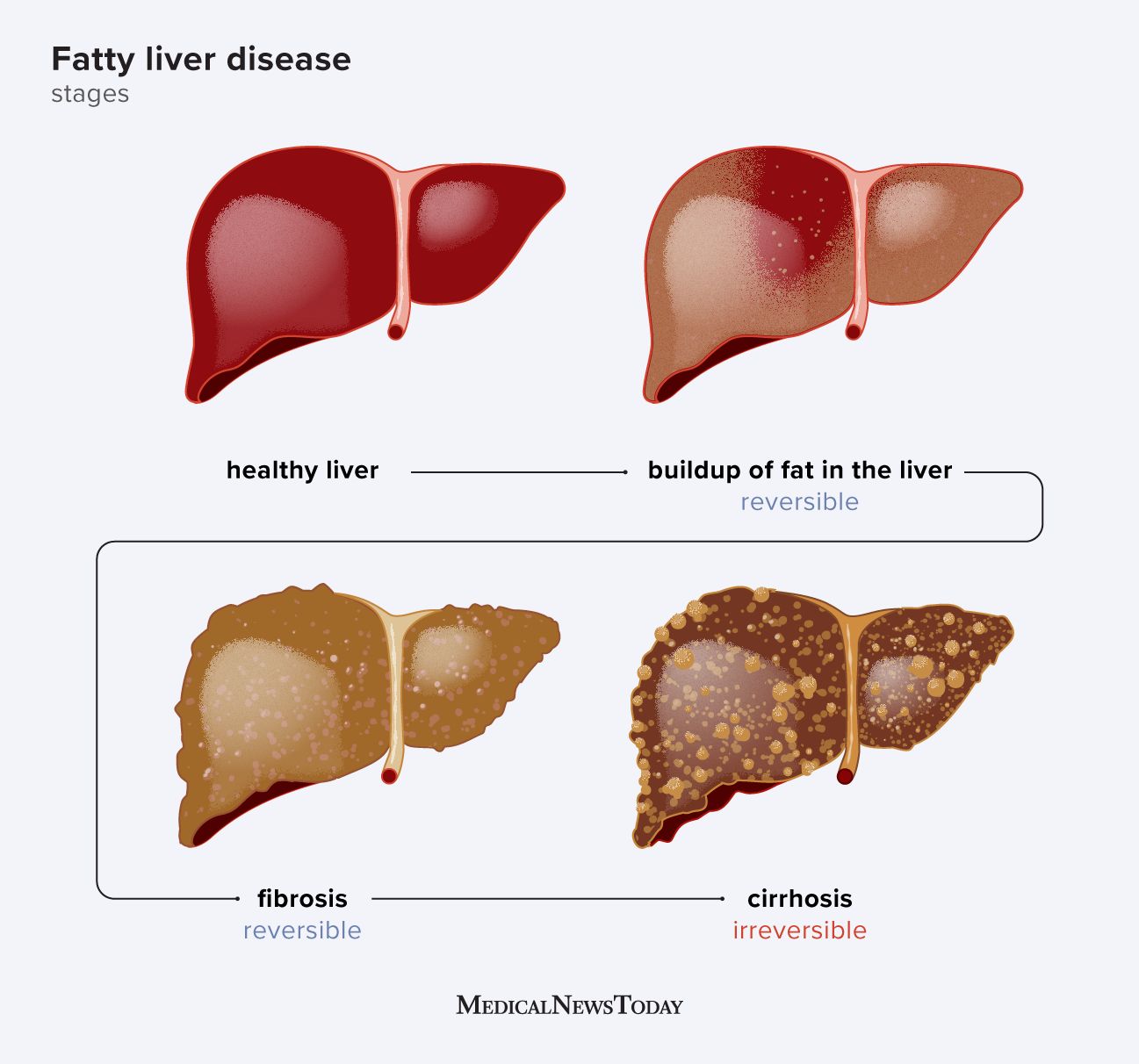
When MASLD progresses, it can cause liver inflammation and enlargement known as MASH. Continued inflammation can cause scarring or fibrosis. The scarring hardens the liver, meaning it cannot work properly. The most severe scarring is called cirrhosis. Around 3% to 5% of people with cirrhosis develop liver cancer each year.
A person may be able to prevent MASH by receiving an early diagnosis of MASLD and following medical advice.
Alcohol-related liver disease (ALD)
People who regularly drink more than the recommended guidelines for alcohol may develop ALD. As the liver breaks down the excess alcohol, it can kill liver cells and generate harmful substances.
Fat buildup in the liver due to excessive drinking is stage one ALD. If a person stops drinking completely, their liver can recover over the following months and years.
Alcohol-related fatty liver can develop into alcohol-related hepatitis, which is stage two ALD. This usually follows years of excessive alcohol use. The third and most serious stage of ALD is cirrhosis.
Metabolic dysfunction and Alcohol-related Liver Disease (Met-ALD)
Met-ALD affects around 17 million people in the United States. Doctors may diagnose Met-ALD when a person has cardiometabolic risk factors, such as high cholesterol and blood pressure, and also drinks:
- 30 grams (g) to 60 g of alcohol per day for men, which is
2 to 4 drinks - 20 g to 50 g of alcohol per day for women, which is 1.5 to 3.5 drinks
This level of drinking is less than the thresholds necessary for a diagnosis of ALD but more than the the thresholds necessary for an MASLD diagnosis.
This new category of SLD recognizes that both metabolic risk factors and alcohol consumption can contribute to fat accumulation in the liver.
The use of binary terms such as “male” and “female” or “men” and “women” in this article reflects the language of the sources we’ve used. Unless otherwise noted, it’s unclear whether the research we reference included participants with expansive gender identities.
Cryptogenic SLD
A doctor may diagnose cryptogenic SLD when a person has a buildup of fat in the liver but no cardiometabolic risk factors or history of excessive alcohol use.
Cryptogenic SLD requires more in-depth tests to determine the cause. Like other forms, it can progress to fibrosis and cirrhosis.
Doctors sometimes call SLD a silent disease. This is because a person may not experience symptoms, even as the disease progresses.
However, the condition can enlarge the liver. This may cause pain or discomfort in the upper right side of the abdomen, which is the area between the hips and chest.
Early symptoms can include:
- loss of appetite
- feeling sick or vomiting
- weight loss
- tiredness
If SLD progresses to cirrhosis, a person may experience the following symptoms:
- jaundice — yellowing of the skin and eyes
- severe itching
- fluid retention in the abdomen (ascites)
- fluid retention in the ankles (edema)
- mental confusion
It can be difficult for a person to know when to seek advice from a doctor because SLD often has no symptoms.
Doctors will consider a person’s medical history, diet, and lifestyle habits. They will also carry out a physical examination and do other tests to help with diagnosis.
A physical examination may include height and weight checks.
The doctor will also look for signs of jaundice and insulin resistance and check for an enlarged liver.
Blood tests can also show if a person has higher levels of specific liver enzymes.
Imaging tests, such as an ultrasound, CT scan, or MRI, can help identify fat in the liver or other signs of fatty liver disease.
Doctors diagnose SLD when the liver contains at least 5% fat.
A doctor may perform a biopsy. A biopsy involves inserting a needle into the liver and removing a minute sample of tissue. A laboratory technician then examines the tissue to check for disease. This minor procedure uses a local anesthetic to numb the area.
There are currently no medications to treat SLD.
Once fibrosis has developed in the liver, it is more challenging to treat. However, with lifestyle changes, people may be able to reduce the amount of fat in the liver, so the liver can repair itself.
For people with MASLD, reducing body weight by at least
However, losing weight too quickly can make MASLD worse. Gradual weight loss, using a balanced diet and regular physical activity, is the best approach.
People with stage one or two ALD may be able to reverse liver damage and inflammation or prevent it from getting worse by not consuming alcohol. However, this will not reverse cirrhosis.
It may be extremely difficult to give up alcohol. A doctor can give advice about doing so safely. Support groups, such as Alcoholics Anonymous provide peer
Read about alcohol use disorder and its treatment.
Doctors may recommend medications, minor medical procedures, or surgery to treat the complications of cirrhosis.
If a person develops liver failure or liver cancer, they may need a liver transplant, although they must meet certain criteria, including a commitment to not drinking alcohol.
Making lifestyle changes is essential for improving SLD. They include:
- losing excess weight
- abstaining from alcohol
- eating a nutritious diet with modest portion sizes
- being physically active
- getting plenty of sleep to help the body repair
Diet
A doctor may recommend the following
- limit fat intake as it is high in calories and replace saturated fats with healthy fats, such as avocado, olive oil, and oily fish
- avoid sugary foods and refined carbohydrates, such as white bread and pasta, which increase sugars in the blood
- limit red meat and processed foods
- eat a a variety of fruits, vegetables, and whole grains
Physical activity
Being physically active is important for losing weight and improving general health. Staying active means avoiding long periods of sitting or lying down, and working activity into daily life. Household chores, gardening, and other activities that require moving around can help improve a person’s fitness and mobility.
On top of daily physical activity, people can aim for
Muscle strengthening exercises are also important. They can strengthen bones, prevent age-related muscles loss, and help with weight loss. The more muscle someone has, the more calories they burn, even while resting.
People with excess fat in the liver have a
If doctors detect fibrosis in the liver, it is possible to reverse it with lifestyle changes and prevent it from developing into cirrhosis. However, people often live with fibrosis without realizing they have it and continue the lifestyle choices that contribute to it.
Once cirrhosis develops, the relative survival rates are as follows:
- Mild cirrhosis: 1-year survival around 100% and 5-year survival around 64%
- Moderate cirrhosis: 1-year survival around 80% and 5-year survival around 60% to 75%
- Severe cirrhosis: 1-year survival around 45% and a 5-year survival around 34% to 50%
Key terms explained: Relative survival rates
Relative survival rates compare the survival of people with a certain disease, such as cirrhosis, to people without the disease, over a certain time period. For example, a 5-year relative survival rate is the percentage of people who are alive 5 years after a diagnosis compared to people without that disease.
SLD occurs when fat builds up in the liver. This can cause the liver to stop working properly.
The two main causes of SLD are carrying excess weight, which causes cardiometabolic risk factors, and drinking excess alcohol over long periods. Genetics may also play a role.
Although SLD is often asymptomatic, people may experience weight loss, loss of appetite, and tiredness.
If the disease progresses and develops into cirrhosis, a person may experience jaundice, itching, and swelling.
A person can improve or prevent SLD by maintaining a moderate weight, being physically active, and limiting or abstaining from drinking alcohol.